
The words “passion” and “compassion,” unsurprisingly, share a similar Latin root, “pati,” meaning “suffer,” and “compati,” translating to “suffer with.” The word passion traveled the winding road from Latin to Old English, to Old French. Romans associated suffering with Prometheus, so the Christian application of passion as it refers to Jesus’s suffering and death also remained intact, but we might scratch our heads at how suffering arrived at the widespread usage to mean strong and barely controllable emotion and an intense desire or enthusiasm. However, if you think about it, any of us who have loved intensely and lost love understand passion in this context, just as do any of us who have acted on our passions for producing art (including writing books!) or the passion required to start a business, for with all things requiring intense emotional outpouring, there will be disappointment, setbacks, and jarring moments of self-doubt. Suffering, my friends, is part of the human condition.
But I’ll tell you two things: 1) once we link passion and compassion, when we realize that “suffering with” others, sharing their pain and disappointment, seeing our unity in the human condition and its inevitable ups and downs, we find a pathway to acting on the pure joy found in passion alongside the intense emotion that comes with our stumbles; and 2) the hard things we will encounter never outweigh the rewards of acting on our passion.
“Follow your passion” is advice we hear all the time. It’s easy to overlook the value of figuring out what you are truly skilled at. Passion indeed sparks inspiration, but without competence, it often burns out. Likewise, relying solely on what you are good at—without any emotional connection can lead to a mechanical and mundane life.

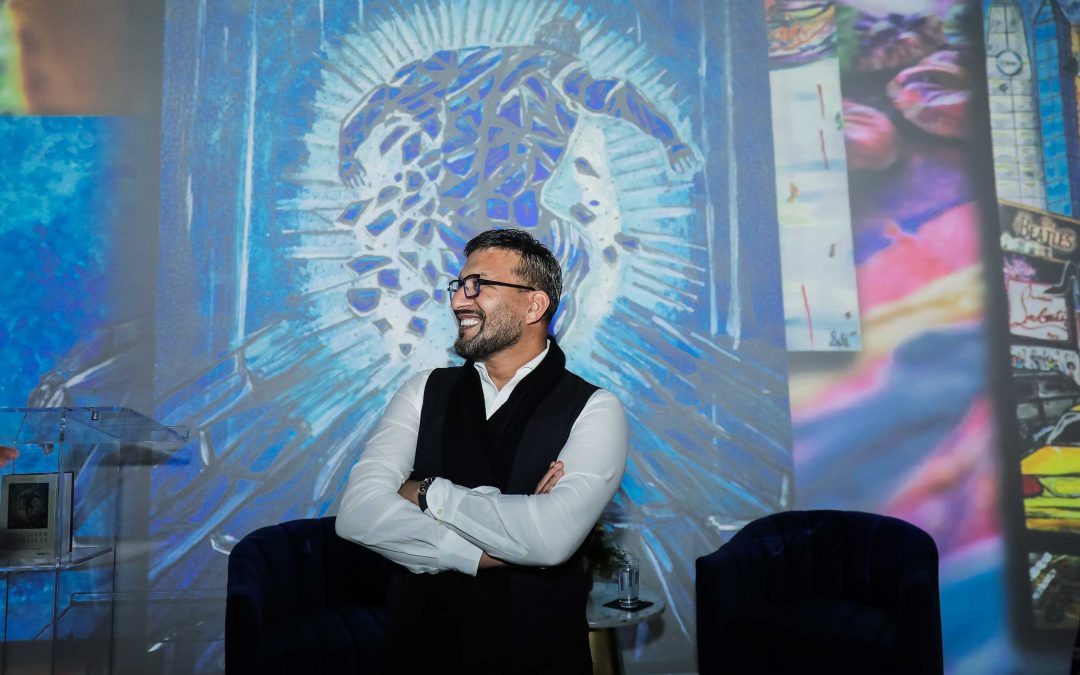
“The Bloom Within” — A poetic celebration of inner beauty and growth. The rich background feels floral and expansive, suggesting a soul in full bloom.
S. Irfan Ali, MD – original artwork
As you may have gathered already if you have perused this website at all, I have passion for many things, including my work as a clinician, an artist, and photographer as evidenced by the images you’ll can view in the gallery and those that illustrate my book Fractured but Fearless. The art I produce is a pure expression of my emotion, work that brings me great joy, work for which the reward is entirely intrinsic and “success” is measured in the process of creating and in the satisfaction of having created. And, yes, as anyone who participates in artistic expression in any form—writing, music, dance…in any medium you might name—there is often suffering along the way, suffering in trying to get the process right, in recalling memories or loved ones now passed, in translating emotions we don’t fully understand. I make my living by practicing medicine and as a healthcare executive, but both of those pursuits are every bit as much passion ventures for me as are art, photography, and writing. The pursuit of excellence in healthcare is a personal crusade fueled by a deep-seated passion to make a tangible difference in the lives of my patients. When I first began to expand my vision of the impact I could have in healthcare by becoming an entrepreneur, one hospital CEO asked me, “Dr Ali, why do you want to expand your services to another market?” I replied, “Destiny is a very big word for a small man like me, but I feel this is mine. I don’t have to fix everything, but I would like to do my part.”

“Echoes in Silence” — Suggests thoughtful introspection, with a calm atmosphere where the mind echoes inwardly, reflecting past experiences.
S. Irfan Ali, MD – original artwork
Part of the beauty on this Earth is that we are all driven by different passions. We are as unique as snowflakes. Some argue that people place too much emphasis on passion, that passion can be unrealistic, that passion cannot necessarily pay the bills. They, in short, see life as filled with necessary suffering. And while it is true that we all must accomplish some essential things to keep ourselves alive, who are we to judge another’s passion? I think often of an elderly man in a small village in my native Pakistan. He has a perpetual smile on his face. He laughs with ease. He has few material possessions. He lives a simple life. But he is close to his family, finds real pleasure in sipping tea with cherished friends, likes to be outside in pleasant weather. In the West, we might accuse this man of not having ambition, but perhaps he has found happiness we have missed. If true, it is because we have mistaken an understanding of his passions. Our own passions may be different. They may be more “ambitious.” But whatever we do in this life, should we not find extreme emotion in participating in the things in which we find meaning?
No matter the nature of our passion, will we suffer along the way? Of course. Life’s not just sunshine and rainbows. Moments of relief, rebellion, experiment, and freedom are as much a part of the fabric of life as challenges and uncertainties. That’s the beauty of it all—the messy, intricate, and wonderfully unpredictable journey we call life. Let’s meet it with passion.